
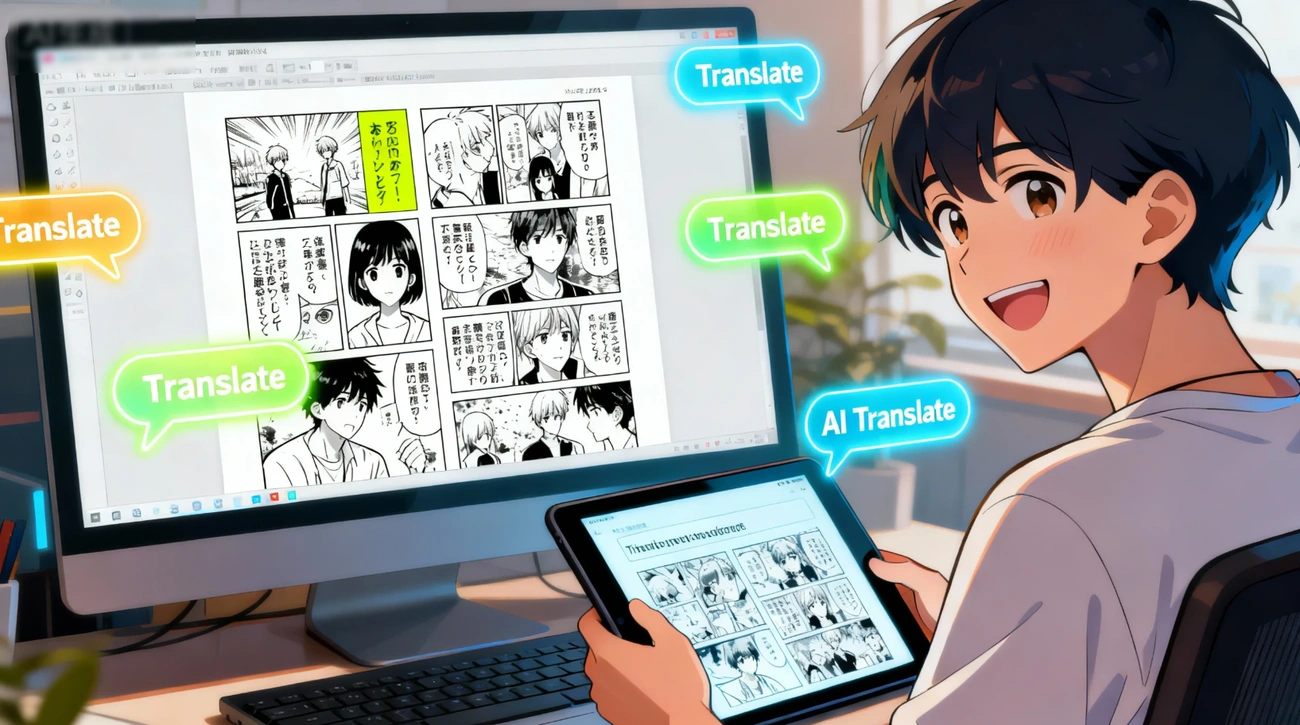
Olympus Scanlation has earned its place as a prominent name in the manga translation community since the early 2000s. This dedicated team works to make manga available to readers who can’t access physical copies or official translations. Their work helps bridge cultural gaps and brings stories from different cultures to readers worldwide.
Quality and authenticity are the foundations of Olympus Scanlation’s manga translations. They fill specific niches that mainstream publishers often miss. The team’s focus includes underground works, shoujo, josei, Boys’ Love, and lesser-known seinen series. They provide translations in English and other languages, but face real-life challenges. Getting high-quality source material and dealing with copyright issues top their list of concerns.
Olympus Scanlation’s soaring win comes from their accurate translations and their ability to promote community involvement. Fans worldwide connect through their forums and social media platforms to discuss translated works. The translation process needs careful teamwork. Specialists handle different aspects – from translation to typesetting. This piece looks at the technical details of their operation. It shows how this influential group keeps its reputation for excellence while respecting creators’ rights.
Understanding Olympus Scanlation’s Mission and Niche

Olympus Scanlation stands out from other manga translation groups thanks to its clear strategy and vision. The group has built its reputation by making smart choices about which titles deserve attention.
Focus on unlicensed and niche manga genres
The team heads over to manga series that most mainstream publishers overlook. Their catalog shines with josei (women’s manga), lesser-known seinen (adult men’s manga), and experimental one-shots that rarely get official English translations. This helps them fill gaps in the global manga ecosystem instead of doing what commercial publishers already do.
They keep a carefully selected portfolio that has works from independent Japanese publishers and artists who might never reach international readers otherwise. The team picks titles based on their artistic merit or historical value that big publishers might skip due to limited profit potential. This gives readers access to stories with more literary depth beyond the usual shonen and action series.
Why Olympus Scanlation avoids mainstream titles
The team has solid reasons to stay away from mainstream manga. Popular series usually get official licensing much faster than niche titles. This means they’d have to abandon projects after putting in lots of work. Working on lesser-known titles also reduces friction with major publishers who keep a close eye on their intellectual property.
Staying clear of mainstream titles means they don’t compete directly with official publishers. This smart positioning lets them work alongside the manga industry rather than against it. The team knows that translating popular series that will soon get official releases just creates extra work and might hurt legitimate distribution channels.
Resources matter too. By translating obscure works, the team can use their limited time on titles that might never see translation otherwise. This makes their contribution to manga accessibility much more valuable.
Role in preserving underrepresented stories
The team’s most important work involves cultural preservation. Many classic manga series from decades past remain locked in Japanese despite their cultural or artistic value. The team actively finds and translates these historically vital works that commercial publishers ignore due to age or limited appeal.
They also preserve experimental manga that expands artistic boundaries but lacks mass appeal. These translations help document manga’s full range as an art form, not just its commercial hits.
Gender representation is a vital part of their preservation work. The team seeks out female creators who often get overlooked in international manga circles. This includes josei and sophisticated shoujo titles that tackle complex social themes from women’s point of view.
This focus on underrepresented stories makes Olympus Scanlation both translator and cultural guardian. Their work keeps manga’s diversity available to global readers and prevents important artistic contributions from disappearing just because they don’t fit mainstream commercial interests. This preservation strengthens manga as a global art form by protecting its full range of expression, not just its profitable parts.
The Complete Scanlation Workflow at Olympus

A meticulous technical workflow powers every manga page that Olympus Scanlation translates from Japanese to English. The team follows a structured process with specialized stages that will give quality results and help them maintain their reputation for excellence.
Raw acquisition and scanning process
Raw manga pages from Japanese magazines or digital releases start the scanlation trip. The team uses high-quality scanners to capture physical copies at resolutions between 300-600 dpi and preserve fine details in grayscale format. They line up pages carefully during scanning to avoid skewed images that might need correction later since this can reduce image quality.
The team reviews each scanned page for completeness and clarity right away. Pages then go through original processing to optimize contrast and remove scanner artifacts. Rather than waiting until all pages are digitized, Olympus processes batches throughout the scanning phase. This approach allows quick corrections of any problems.
Image cleaning and text removal techniques
Editors clean the prepared raw pages by removing Japanese text while preserving the artwork. This vital step uses specialized software like PanelCleaner. The program uses machine learning to detect and mask text areas with exceptional accuracy. It creates precise masks to cover text without affecting surrounding artwork. We focused on speech bubbles while preserving sound effects that Olympus sees as integral to the manga’s visual storytelling.
Skilled editors manually fix areas where AI might miss text or don’t deal very well with complex backgrounds. The team avoids automated inpainting features. They opt for separate, more controlled processes to reconstruct backgrounds where text has been removed.
Translation accuracy and tone preservation
The cleaned pages move to translators who convert Japanese dialog into natural, flowing English. This task needs more than language proficiency – it requires cultural understanding and contextual awareness. Translators read entire chapters to learn context before starting translation. This approach ensures consistency in character voices and story flow.
The team values meaning and tone over literal translation. They pay special attention to idioms, cultural references, and Japanese dialects. Regional speech patterns like Kyoto’s feminine “-e” particle or Nagoya’s distinctive “-ni” endings need thoughtful adaptation to keep character personality in English.
Typesetting with visual consistency
The translated text finds its place in cleaned speech bubbles through typesetters who maintain visual harmony with the original artwork. This detailed process involves picking appropriate fonts, managing text spacing, and ensuring legibility while respecting the manga’s esthetic. Olympus’s typesetters avoid these common mistakes:
- Using inconsistent font sizes between bubbles
- Overfilling speech bubbles (leaving at least one-third white space)
- Selecting inappropriate fonts that clash with the manga’s mood
Each bubble gets careful shaping for optimal readability, with text arranged in what professionals call an “egg-shaped” layout.
Proofreading and final quality checks
The final stage involves detailed quality review. Proofreaders check:
- Grammar and spelling accuracy
- Translation fidelity to source material
- Typesetting consistency across pages
- Visual anomalies or remaining artifacts
Multiple reviewers check each other’s work to catch any missed issues. Olympus’s proofreaders combine strong language skills with simple Japanese knowledge. This combination lets them verify translation accuracy alongside English fluency. The team performs one last page-by-page review before release to verify that the final product maintains both visual quality and narrative integrity.
This rigorous workflow helps Olympus Scanlation transform raw Japanese manga into polished English editions. Their work honors the original creators’ vision while making these works available to new audiences.
Team Roles and Collaboration Behind the Scenes

Olympus Scanlation’s team members work together to create quality manga translations. The team has a synchronized workflow that turns Japanese manga into content that readers worldwide can enjoy. Each person on the team plays a key role in making this happen.
Translator vs. Proofreader responsibilities
Translators are the foundations of what happens at Olympus Scanlation. They turn Japanese dialog and narration into English or other languages. They just need language skills and cultural understanding to adapt idioms, jokes, and cultural references that don’t translate well. Proofreaders step in after the translators finish their work. They check everything for accuracy, grammar, and how easy it is to read. They add notation marks, look at sentence structure, and make sure the translation keeps the original feeling and emotion. This two-step process creates a quality system where translators focus on meaning while proofreaders make the language shine.
Cleaner and Typesetter coordination
Cleaners and typesetters work as a team. Cleaners start by removing original Japanese text and keep the artwork looking perfect. This careful process often means they have to redraw parts of the manga where text and art overlap. Typesetters then put the translated text into speech bubbles. They pick the right fonts and make sure everything looks consistent. These roles depend on each other – cleaners must give typesetters properly prepared pages to work quickly. They use shared project management platforms to talk to each other.
Use of project management tools for scheduling
The team uses special project management software to work together smoothly. They use Trello’s visual boards to organize production stages and Monday.com’s customizable workflows to track content schedules. Team members can see how projects are going, handle deadlines, and talk to each other even when they’re far apart. Notion also helps as a central place for keeping editorial guidelines and documentation.
Maintaining consistency across multiple projects
Keeping the look and story consistent in many manga projects isn’t easy. Olympus Scanlation uses standard style guides and regular quality checks before releasing anything. Final reviewers look at completed chapters to find any grammar, spelling, or formatting errors. They also make sure the translation stays true to the original. This attention to detail has helped build Olympus Scanlation’s reputation in the scanlation community.
Cultural Sensitivity and Language Nuance in Translation

Manga translation goes beyond simple word-to-word conversion. It demands deep cultural understanding and careful decision-making. Olympus Scanlation strikes this delicate balance by preserving Japanese storytelling while making content available to English readers.
Handling idioms and cultural references
Japanese idioms create unique translation challenges because they reflect cultural concepts without English equivalents. Recent studies reveal that translators paraphrased 28 out of 34 idioms in manga translations, with only five receiving direct translations. The team must choose between localizing or keeping the original context when they encounter culture-specific references. The source material loses its richness when cultural elements get overlooked.
The translators at Olympus handle cultural references with precision. Take お盆 (Obon), a Japanese ancestral festival, as an example. They might keep the Japanese term and add a brief explanation, or use fitting English terms that capture similar meanings.
Use of honorifics and Japanese terms in English
Japanese honorifics (-san, -sama, -kun, -chan) convey social information about character relationships. These suffixes show respect levels, age gaps, and intimacy that English cannot directly express. Olympus Scanlation keeps these honorifics, especially in Japan-based manga or when relationship dynamics play a vital role in the story.
This strategy helps maintain character interactions authentic. A character who changes from “Tanaka-san” to “Tanaka-kun” shows an important relationship change. This nuance would disappear if translated simply as “Tanaka”.
Balancing localization with authenticity
Olympus Scanlation expertly balances English reader accessibility with Japanese cultural authenticity. Modern trends favor keeping Japanese elements instead of complete localization. This marks a change from older practices that often “Westernized” manga content.
Translators in previous decades might have changed onigiri (rice balls) to “sandwiches” for Western audiences. Modern translations now keep these cultural markers intact. Olympus believes authentic elements make the reading experience better and satisfy readers’ interest in Japanese culture.
Ethical and Legal Considerations in Scanlation

Scanlation operates in a complex legal area, and groups like Olympus Scanlation must navigate it carefully. Their operational policies reflect the ethical balance between making content accessible and protecting creators’ rights.
The ‘Golden Rule’ of stopping after licensing
The scanlation community follows one basic principle – they stop translating once a manga gets an official license. This practice sets ethical scanlation apart from basic piracy. Olympus Scanlation stops distributing titles right after learning about licensing announcements. Many scanlation websites display clear licensing notices that state “all rights are reserved” to official publishers. Scanlators show respect for creators through this self-regulation and they ask readers to buy official releases: “If you liked these scanlations, please support the mangaka by buying their works!”.
Copyright risks and DMCA takedowns
Copyright infringement exists in scanlation all the same, no matter the intentions. MangaDex, a major scanlation platform, learned this the hard way when it faced coordinated DMCA takedowns affecting more than 700 manga series. The removals hit both licensed and unlicensed titles. This action was the largest the platform had ever faced, showing publishers’ increased watchfulness toward unauthorized distribution. Japanese lawmakers were “shocked” to learn that illegal manga consumption costs their industry about 1 trillion yen.
Olympus Scanlation’s stance on monetization
Olympus Scanlation runs on strict non-commercial principles and refuses to make money from their work. This matches the broader scanlation community’s focus on non-profit values. Some groups accept PayPal donations, but Olympus stays completely non-profit. Each release comes with clear disclaimers that remind readers to support official translations when they’re available. The group ended up building its operation around respect – for creators, audiences, and original works.
Conclusion
Olympus Scanlation represents a perfect blend of passion and purpose in the manga community. Their team’s meticulous technical processes and specialized roles help bridge cultural gaps while keeping Japanese storytelling authentic. They focus on works that commercial publishers often skip, which adds rich and diverse narratives to the global manga landscape.
The organization has developed a workflow that turns raw Japanese material into polished translations. Each step needs both technical expertise and artistic sensitivity, from careful scanning and cleaning to nuanced translation and precise typesetting. Their systematic approach and quality standards have earned them respect among manga fans worldwide.
The team at Olympus directs the challenging ethical aspects of unauthorized translation with principle and respect. They support original creators by following the “golden rule” of stopping distribution after official licensing. Their work keeps cultural elements like honorifics and Japanese-specific references intact, which shows how important cultural context is in storytelling.
Groups like Olympus do more than just translate. They act as cultural archivists and save artistically important works that might not have enough market appeal for commercial release. Their forums and social media spaces let fans connect and share their interests from anywhere in the world.
Scanlation might exist in a legal gray area, but Olympus Scanlation’s non-profit model and respect for creators’ rights show how fan communities can boost global manga appreciation. Their work helps readers find diverse stories and benefits the manga industry by building engaged audiences who often buy official releases when they become available.
FAQs
1. How does Olympus Scanlation choose which manga to translate?
Olympus Scanlation focuses on unlicensed and niche manga genres, particularly those that are underrepresented or overlooked by mainstream publishers. They prioritize titles with artistic merit or historical significance, avoiding popular series that are likely to receive official translations.
2. What is the typical workflow for translating manga at Olympus Scanlation?
The process begins with acquiring and scanning raw manga pages, followed by image cleaning and text removal. Translators then convert the Japanese text to English, after which typesetters insert the translated text. Finally, proofreaders conduct quality checks before the manga is released.
3. How does Olympus Scanlation handle cultural references and language nuances?
The team carefully adapts idioms and cultural references, often paraphrasing them to maintain meaning. They typically retain Japanese honorifics and certain cultural terms to preserve authenticity while ensuring the content remains accessible to English readers.
4. What ethical considerations does Olympus Scanlation follow?
Olympus Scanlation adheres to the ‘Golden Rule’ of stopping translation once a manga receives official licensing. They operate on a strictly non-commercial basis and include disclaimers encouraging readers to support official releases when available.
5. What tools are used in the manga translation process?
While specific tools may vary, manga translation often involves OCR (Optical Character Recognition) software for digitizing text, specialized cleaning software like PanelCleaner, and project management tools such as Trello or Monday.com for coordinating team efforts.