
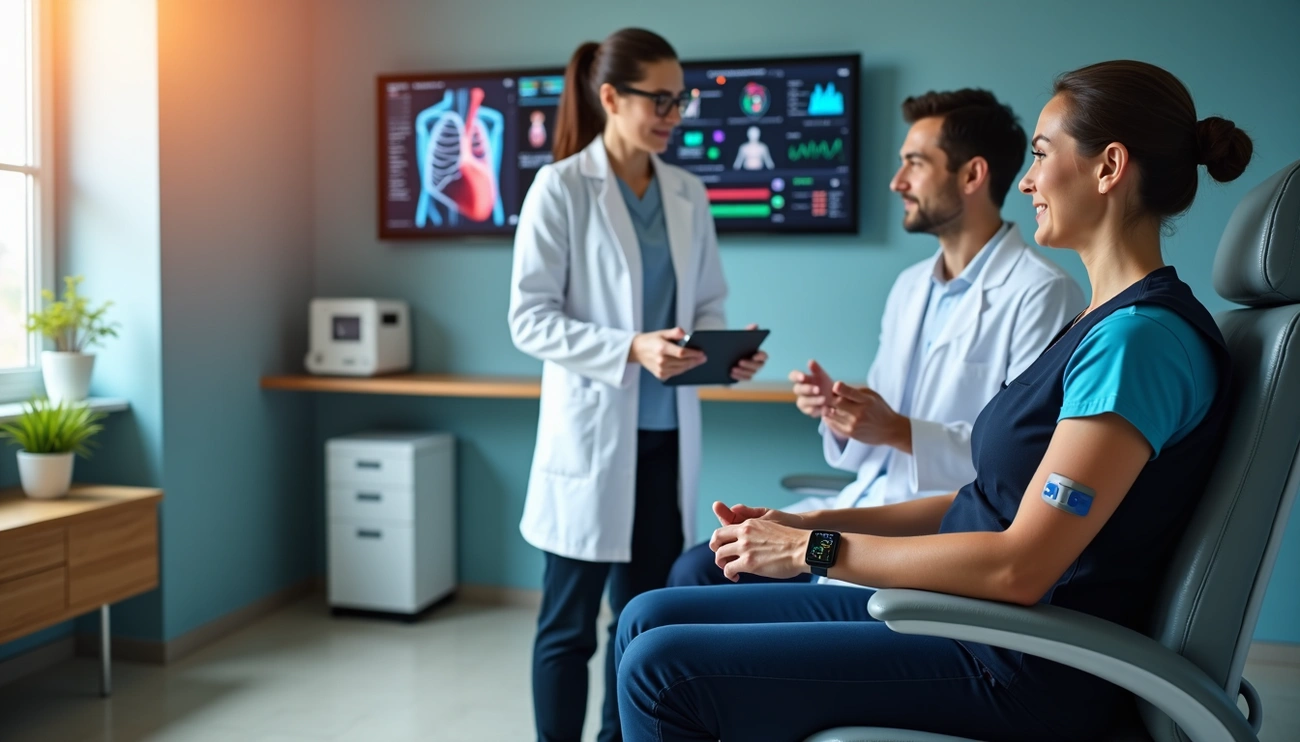
Healthcare outcomes have changed remarkably through iofbodies.com applications. A 2025 study in The Lancet shows that heart failure patients’ hospital readmissions dropped by 35% through remote monitoring with these applications. The NFL’s adoption of this technology for immediate performance tracking led to a 20% reduction in player injuries.
These digital health solutions reach far beyond professional sports. Mobile phone interventions with iofbodies com applications helped 1,657 participants achieve lower HbA1c values. Companies using this technology saw their productivity rise by 15%. The application’s dashboard works as a hub where patients and healthcare providers track health metrics easily. This technology proves especially valuable when managing chronic conditions. IoT and AI-based solutions can track and report heart patients’ activities. This creates a complete care system that connects clinical settings with daily life.
Revolutionizing Remote Monitoring with iofbodies.com

Remote patient monitoring through iofbodies.com applications has changed healthcare from periodic check-ups to continuous health oversight. Healthcare providers can now track vital signs and detect subtle changes that might signal health issues before they become critical.
Continuous Glucose Monitoring via CGM Integration
The integration of Continuous Glucose Monitoring (CGM) systems with iofbodies.com applications has changed diabetes management. Modern CGM devices naturally connect with the platform and provide immediate glucose readings day and night. The Dexcom G6, designed for 10-day wear, gives accurate readings during normal and low glucose levels without calibration. It maintains an overall Mean Absolute Relative Difference (MARD) of 10%.
Abbott’s FreeStyle Libre, another CGM system that works with iofbodies.com, acts as an intermittent scanning device. It achieved a MARD of 9.2% in adults and 9.7% in pediatric patients with its updated algorithm. These devices can work as real-time monitors when connected to third-party transmitters. They send data directly to smartphones and the iofbodies.com platform.
These integrated systems do more than just add convenience. Research shows that CGM technology combined with education leads to better glycemic outcomes than CGM alone. The rise of Automated Insulin Delivery (AID) systems that connect with iofbodies.com helps achieve target glycosylated hemoglobin levels while reducing hypoglycemia risks.
Cardiac Event Detection with Real-Time Alerts
Cardiac monitoring through iofbodies.com is a vital advancement in preventive cardiology. The COVID-19 pandemic showed why remote cardiac monitoring matters, as evidence pointed to an increase in acute cardiovascular mortality unrelated to COVID-19 infection.
The platform works with electrocardiogram (ECG) devices that monitor heart rhythm and detect irregularities. Each arrhythmia type creates a distinct ECG pattern, which helps the system identify structural heart abnormalities. Deep learning algorithms help these systems classify abnormalities into six categories, which enables early detection and treatment.
A wireless ECG monitoring system sends signals at 200 samples per second to mobile devices. The system processes raw data within about 70 seconds to detect anomalies quickly. The system alerts both patients and healthcare providers when it spots abnormal patterns, which could prevent cardiac emergencies.
Remote Patient Dashboards for Clinician Oversight
The iofbodies.com platform has complete dashboards that help healthcare professionals monitor patient metrics. These dashboards gather vital data from connected devices and show them in an easy-to-understand format.
Healthcare providers find it hard to track every patient’s vital data by hand. The remote patient monitoring dashboard solves this by showing critical metrics and helping providers learn from the data. The platform offers different dashboard types based on specific monitoring needs:
- Admin dashboards collect patients’ vitals from wearable devices to help administrators generate monthly reports and analyze trends
- Post-surgery monitoring dashboards track recovery using specific parameters like WOMAC scores for knee replacements
- Specialized condition dashboards such as Deep Vein Thrombosis (DVT) monitoring systems that connect to patients’ devices and display heart rate, blood pressure, and oxygen saturation levels
PrimSphera, a healthcare technology company using the iofbodies.com platform, created their dashboard to tackle data tracking and immediate alert challenges. Their solution gives secure access to patient health records while following industry regulations.
These remote monitoring capabilities have changed healthcare from reactive to proactive. Clinicians can now step in before conditions worsen and reduce unnecessary hospital visits for routine monitoring.
Personalized Treatment Plans Using Real-Time Data

Medical care reaches new heights through iofbodies.com applications that turn immediate physiological data into tailored care plans. Healthcare providers can now create specialized interventions based on continuous patient information instead of periodic checkups.
Adaptive Chemotherapy Dosing Based on Sensor Feedback
Cancer treatment has made great strides with sensor-based chemotherapy dosing systems. The Closed-Loop Automated Drug Infusion Regulator (CLAUDIA) marks a breakthrough. It maintains drug concentrations within therapeutic windows. Traditional body surface area (BSA) calculations came from just nine individuals a century ago. CLAUDIA takes a different approach by sampling blood right away to measure actual drug concentrations.
The system uses an adaptive proportional-integral-derivative (PID) controller that adjusts its settings based on immediate concentration data. Treatment becomes truly tailored as the algorithm knows the right concentration for specific drugs and changes infusion rates.
The advantages go beyond precision. Two types of adaptive therapy strategies exist:
- Intermittent therapy, where fixed doses continue until specific thresholds
- Continuous adaptive therapy, which uses variable dosing to keep tumor volume steady
This approach has showed success in clinical trials for advanced metastatic prostate cancer and in preclinical models for ovarian cancer, breast cancer, and melanoma. These systems keep sensitive cell populations within tumors and prevent resistant cell populations from taking over. This could lead to longer progression-free survival.
Tailored Fitness Regimens via Smart Clothing Analytics
Smart clothing has changed fitness monitoring by combining conductive threads with artificial intelligence. Cornell University’s SeamFit shows this progress with regular-looking shirts that have flexible conductive threads in the neck, arm, and side seams. These clothes track movements with 93.4% accuracy and count repetitions with less than one error on average.
The clothes work by measuring changes in the threads’ capacitance as they move against the body. A custom machine-learning pipeline interprets these movements without manual workout logging or user calibration.
These smart garments do more than track. They offer personal coaching through mobile apps. Users get custom workout plans and immediate coaching tips based on their performance. This technology helps people set and reach fitness goals by offering tailored approaches to physical activity.
Integration with ibody.com for Custom Health Insights
The team-up between iofbodies.com and ibody.com builds a detailed health intelligence system. This brings together information from many sources: health records, wearables, medical devices, and lab tests.
Healthcare providers can track various health metrics through this unified platform:
- Body composition measurements like skeletal muscle mass and visceral fat
- Metabolic indicators including glucose trends from continuous monitors
- Performance markers such as heart rate variability and sleep quality
Clinicians can spot connections between body composition and lab values (like A1c and ApoB) and get alerts about major health changes. The platform tracks baseline measurements and how quickly multiple parameters change. This helps make protocols more personal.
The platform offers analytics that compare outcomes across programs and groups, including GLP-1 users versus non-users. These findings help healthcare providers improve treatments based on real results rather than general guidelines.
AI and machine learning turn raw data into useful health recommendations that adapt to users’ progress. This analytical approach makes sure fitness routines and nutrition plans match each person’s body responses.
Enhancing Patient Engagement Through Visual Tools

Visual tools on iofbodies.com have changed how patients understand their health conditions. These tools help bridge the gap between doctors and patients. Medical interactions have become more meaningful as a result.
Interactive Anatomy Models for Patient Education
3D anatomy models on iofbodies.com give patients new ways to see and understand their bodies. Users can move and explore virtual body systems on these platforms. This hands-on approach helps people grasp human biology better than traditional diagrams. BioDigital’s platform powers many of these visuals and serves over 5 million students, teachers, clinicians, and professionals who use these tools to learn about health. The system has mapped more than 1,000 health conditions so far, and new ones are added monthly.
These visual tools make a real difference – 96% of users say they understand information better with this software. Users can rotate, zoom, and analyze these 3D models. Each part of the anatomy comes with clear labels that patients can easily understand.
Application Dashboard Walkthrough for Telehealth Sessions
Telehealth dashboards on iofbodies.com work as control centers for remote medical visits. The system has separate portals for healthcare providers and patients. Users can upload PDF documents and share secure appointment links.
Healthcare professionals can access HIPAA-compliant note systems. Patients get a user-friendly interface to manage their appointments. The dashboard tackles common telehealth challenges by offering:
- Live transcription services to improve accessibility
- Easy meeting sharing with one-click link copying
- Calendar integration to manage appointments
Use of iofbodies.com in Explaining Chronic Conditions
The platform’s greatest value lies in how it helps explain complex chronic conditions. Last year alone, the platform supported 100 million health conversations, showing its value in clinical discussions.
AI features help analyze collected data to spot patterns and health risks before they show up clinically. Doctors can show patients their likely health outcomes through visual aids. This makes abstract health concepts easier to understand.
Medical students can practice disease progression and surgical procedures in virtual simulations. They can learn and improve their skills without any risk to patients while reducing mistakes.
Addressing Privacy and Consent in IoB Applications

Privacy challenges are everything in iofbodies.com applications that collect unprecedented amounts of personal health data. Technology and personal health information create unique concerns that need well-thought-out solutions.
Data Ownership Conflicts in Wearable Devices
The question “Who owns the data your body generates?” remains a hot topic in the IoB world. Device manufacturers claim ownership because they need to improve their products. Users believe the data belongs to them since it comes from their bodies. Insurance companies and other third parties want access to this information too. A U.S. insurance company sparked widespread concern by raising rates based on Fitbit data in 2024. Some experts want a “data commons” model where users keep main control of their information.
Consent Management via the Iofbodies Privacy App
The Iofbodies Privacy App tackles these privacy issues with resilient controls. Users and authorized people can access the data through end-to-end encryption. The app’s anonymization features create a digital mask by removing personal identifiers before sharing. Users control exactly what they share – heart rate readings with doctors, step counts with fitness apps, or nothing with advertisers. The platform works with major devices like Apple Watch and specialized implants. The app reached version 2.1 since its 2024 launch and users praise its better performance.
Regulatory Gaps in HIPAA and GDPR for IoB
Current regulations don’t deal very well with IoB technological advances. HIPAA in the U.S. and GDPR in Europe provide limited protection because they weren’t designed for devices that collect data continuously. Many IoB devices bypass HIPAA regulations completely since they operate outside traditional healthcare settings. The EU’s 2025 IoB Data Protection Act tries to fix these gaps by demanding clearer consent mechanisms and data limits. U.S. regulation differs by state – California has stricter standards than Texas.
The Role of the Iofbodies Privacy App in 2025

The Iofbodies Privacy App stands out as a vital tool in the 2025 digital world. The Internet of Bodies (IoB) market has reached GBP 158.83 billion. This application protects against unauthorized data access and enables secure health monitoring.
End-to-End Encryption and Anonymization Features
Advanced encryption protocols are the foundations of the Iofbodies Privacy App’s security. SSL/TLS encryption safeguards both stored and transmitted data. Multiple protection layers make information unreadable to unauthorized users. The app uses sophisticated anonymization techniques to remove identifying elements from sensitive health metrics such as glucose readings and sleep patterns. Users’ personal identifiers stay protected even during security breaches.
Compatibility with Apple Watch, Hexoskin, and More
Seamless integration with biosensor-enabled devices makes this app incredibly useful. Hexoskin smart clothing has achieved iPhone and iPad compatibility and works flawlessly with Apple Watch. Users can view their body metrics on their wrist, which completes the feedback loop between body and mind. The app works with other biosensor devices to offer flexibility in monitoring platforms.
User-Controlled Sharing Settings and Alerts
The app gives users complete control over their health data. Immediate notifications alert users when someone tries to access their information, and sharing requires explicit permission. This transparency keeps users informed about their sensitive health metrics. The system undergoes regular security audits to comply with global privacy legislation including GDPR and HIPAA. These measures maintain ethical data management standards throughout the ecosystem.
Conclusion
The iofbodies.com ecosystem marks a transformation in healthcare delivery. These applications have changed traditional patient care into tailored, analytical experiences. Remote monitoring capabilities have reduced hospital readmissions for heart failure patients by 35%.
Health oversight has moved beyond regular check-ups through uninterrupted integration with CGM systems and cardiac monitoring devices. Healthcare professionals can now detect subtle changes before conditions worsen with live insights from these tools. Complex health data becomes available and useful through critical dashboard interfaces between patients and providers.
These applications excel at providing tailored treatment. Drug concentrations stay within therapeutic windows thanks to adaptive chemotherapy dosing systems. Smart clothing analytics provide custom fitness guidance. The integration with ibody.com creates a unified health intelligence ecosystem that spots connections between various metrics.
Interactive visual tools boost patient participation. Medical professionals and patients bridge their knowledge gap using 3D anatomy models. Telehealth sessions become more effective and available through application dashboards.
Privacy remains the biggest concern. Data ownership conflicts, regulatory gaps, and consent management create ongoing challenges. The Iofbodies Privacy App tackles these issues with end-to-end encryption, anonymization features, and user-controlled sharing settings.
The future looks promising for iofbodies.com applications as they continue to change healthcare by making it more tailored, available, and analytical. This technology enables patients and providers to make informed decisions based on detailed health information instead of isolated clinical snapshots. Without doubt, these evolving applications will blur the lines between preventive and reactive care. They create an integrated approach to health management that goes beyond clinical settings into daily life.
FAQs
1. How are iofbodies.com applications improving patient care?
iofbodies.com applications are enhancing patient care through remote monitoring, personalized treatment plans, and interactive visual tools. These technologies have reduced hospital readmissions, enabled continuous health oversight, and improved patient engagement in managing their own health.
2. What role does remote monitoring play in iofbodies.com applications?
Remote monitoring through iofbodies.com applications allows healthcare providers to track vital signs and detect subtle changes in patient health continuously. This includes integration with devices like continuous glucose monitors and cardiac event detectors, enabling early intervention and reducing the need for frequent in-person check-ups.
3. How do iofbodies.com applications personalize treatment plans?
These applications use real-time data from various sensors and devices to create highly individualized care plans. For example, they enable adaptive chemotherapy dosing based on sensor feedback and provide tailored fitness regimens using smart clothing analytics, ensuring treatments are optimized for each patient’s unique needs.
4. What visual tools are used in iofbodies.com applications to enhance patient engagement?
iofbodies.com applications utilize interactive 3D anatomy models, application dashboard walkthroughs for telehealth sessions, and visual representations of chronic conditions. These tools help patients better understand their health conditions and treatment plans, leading to more meaningful clinical interactions.
5. How does the Iofbodies Privacy App address data security concerns?
The Iofbodies Privacy App employs end-to-end encryption and anonymization features to protect user data. It offers user-controlled sharing settings, provides real-time alerts for data access attempts, and ensures compatibility with various devices. The app aims to give users control over their health data while maintaining compliance with privacy regulations.